Your Impact
Your support empowers RPI to offer new solutions to society’s greatest challenges.
You Bridge the Gap for Deserving Students
Students are the heart of our culture.
At RPI, students aren’t just consuming knowledge; they are co-creators of the future. Your support invites talented, diverse thinkers from every background to join our culture of rigorous inquiry. When we lift the burden of financial limitations, we free students to focus on the research and technology that will change the world.
See the importance of your support:
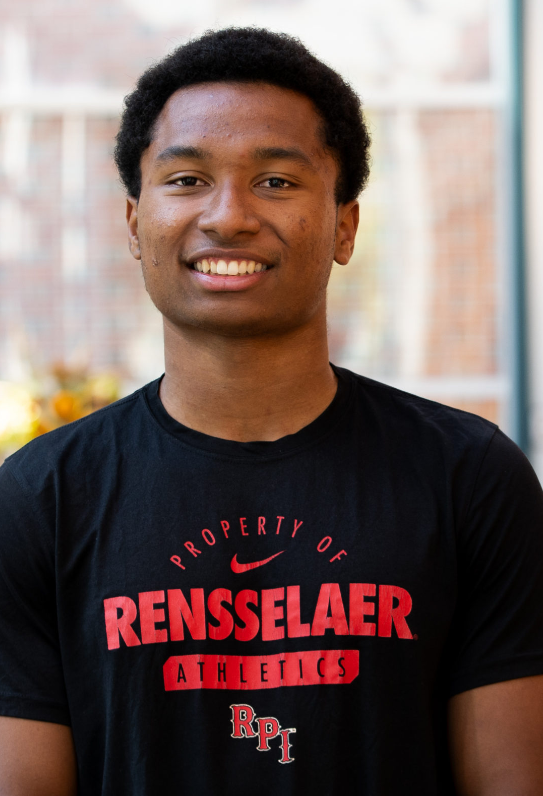
Adrian’s journey from Southern California to RPI is a testament to what’s possible when talented, driven students find the right community and support. A student-athlete majoring in electrical engineering, Adrian came to RPI to challenge himself academically and competitively, and he’s done exactly that. Thanks to the generosity of RPI’s supporters, he’ll graduate debt-free and ready to make a meaningful impact on the world.
Students like Adrian are shaping the future of a more sustainable world.
Read more of his story
Adrian traveled from “corner to corner” across the United States to join the RPI community. Originally from Southern California, he came to RPI for the opportunity to study at a leading engineering institution while also playing collegiate football.
Football has proven to be a key part of Adrian’s RPI experience. As a first-year student, he discovered a welcoming, diverse group of players united by their love for the sport. These football friendships, as well as the relationships he’s developed through his involvement in Cru, have supported his RPI journey every step of the way.
Adrian chose electrical engineering as his major to challenge himself in new ways. Looking to the future, he hopes to use his abilities and education to help steward the earth in healthier, more responsible ways. He’s particularly interested in working with electric vehicles. Thanks to the scholarships he has received, Adrian is on track to graduate from RPI and pursue a bright future in electrical engineering debt-free.
You Help Turn Ideas into Impact
RPI IS A TOP-TIER TECHNOLOGICAL RESEARCH UNIVERSITY
RPI faculty are both mentors and fellow explorers, challenging students as they search for new possibilities. Endowed positions, like the Thomas and Constance D’Ambra Professor of Medicinal Organic Chemistry, provide the essential foundation for discovery to flourish. This gift has empowered Chris Cioffi ’94, Ph.D. ’00, to equip his lab with the tools to build and test new realities, while mentoring a team of student-researchers who are learning to find creative solutions for unique medical challenges.
Read more of the Cioffi Group story
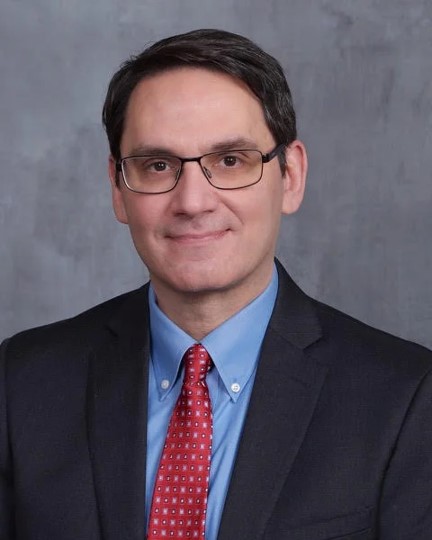
Driving Discovery: An endowed position, the Thomas and Constance D’Ambra Professor in Organic Chemistry, brought Dr. Chris Cioffi back to RPI and fuels his lab team’s enterprising investigations.
With speed and an unapologetic mix of enthusiasm and optimism, Chris Cioffi ’94, Ph.D. ’00, begins talking about his RPI-based lab team and its active research portfolio. Ten researchers. Seven active drug discovery projects. Five National Institutes of Health (NIH) grants. An award from the Edward N. and Della L. Thome Memorial Foundation.
“I’m doing something I really love, and if we can successfully get a drug to market that helps people, well, I can’t think of anything better to do with one’s life,” said Cioffi, a native of New York’s Capital Region and proud RPI alumnus.
Cioffi returned to his alma mater in January 2022 as the university’s inaugural Thomas and Constance D’Ambra Professor of Medicinal Organic Chemistry, following a 16-year career in drug discovery projects at Curia (formerly known as Albany Molecular Research Inc., or AMRI), and six years as a faculty researcher at Albany College of Pharmacy and Health Sciences.
Cioffi’s research targets ocular diseases, which can dramatically affect well-being, daily routines, and quality of life. In one project, Cioffi and his team are attacking Stargardt Disease – a rare condition that robs individuals, often in their youth, of visual acuity – as well as Age-Related Macular Degeneration (AMD). With promising early results, Cioffi and his team continue preparing toxicology studies required by the U.S. Food and Drug Administration before clinical trials begin. If all goes well, Cioffi hopes Phase 1 clinical trials for his team’s novel therapeutic begin within the next five years.
Cioffi’s work, however, extends far beyond debilitating ocular conditions. He is also exploring non-opioid alternative therapies for chronic pain management and novel antiviral drugs to treat COVID-19. “In every project, we’re focused on conducting high-quality science and research to push discoveries forward and help patients,” Cioffi said. While Cioffi acknowledges the long and challenging path – and even longer odds – to achieve clinical approval, the mere potential energizes his daily efforts. “The hope, of course, is that our discovery gets into the clinic, but whether that happens or not, we know our work will inform the broader scientific community and guide the next generation of drug discovery,” he said.
Cioffi describes the D’Ambra Professorship as “transformational,” emphasizing its profound impact on his research. The D’Ambras’ gift has enabled Cioffi to purchase lab equipment for synthesizing and preparing compounds, as well as essential supplies. It has also allowed Cioffi to recruit and support young scientists from RPI’s talented student population, giving him a capable team to generate the necessary preliminary data to produce competitive grant applications. “One thing feeds the next, but it all starts with the space and resources RPI provided with the D’Ambra Professorship,” Cioffi said.
IMPROVING DRUG DISCOVERY: BHANUSHEE SHARMA
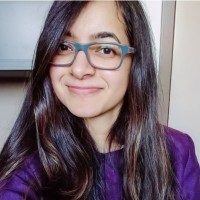
Bhanushee Sharma ’18G, ’22 Ph.D., who recently completed her Ph.D. in chemical engineering at RPI, is determined to save lives and improve the quality of life by providing accessible new medications to all. As part of the Artificial Intelligence Research Collaboration (AIRC), a joint effort between RPI and IBM to advance AI research, she worked on a project aimed at improving the drug discovery process through artificial intelligence (AI) and machine learning techniques.
Graduates like Sharma are changing the future of medicine.
Read more of her story
For millions of people across the globe, medications mean the difference between life and death. For others, they also mean the difference between comfort and pain, and living a normal life versus being limited in daily activities. While new medications have the power to both save lives and improve quality of life for patients with chronic health conditions, the process of bringing a new medication to market for patients in need can take more than a decade and can cost billions of dollars.
Bhanushee Sharma ’18G, ’22 Ph.D., who recently completed her Ph.D. in chemical engineering at RPI, was determined to solve this problem. As part of the Artificial Intelligence Research Collaboration (AIRC), a joint effort between RPI and IBM to advance AI research, she worked on a project aimed at improving the drug discovery process through artificial intelligence (AI) and machine learning techniques.
The current drug discovery process involves both preclinical research, which tests drugs in cells or animals, and clinical research, which tests drugs in people. Sharma, who was advised by Professor Jonathan Dordick and Professor James Hendler at RPI and mentored by Payel Das, research staff member at IBM and manager of AI science at the Thomas J. Watson Research Center, looked at data collected in both preclinical and clinical trials to develop machine learning models that predict the toxicity of drugs before they enter testing in humans.
“Even though a large number of drugs are discovered, very few are actually approved because they end up being toxic in humans or not effective in humans,” Sharma said. “If we have a better idea of the toxicity of these drugs, then we can design drugs that are more likely to receive approval.”
While machine learning models have been developed to predict drug toxicities, many of them have been developed in a way that humans cannot understand. Therefore, one of Sharma’s goals was to develop a model that explains predictions so that scientists can better understand why a prediction has been made. Her explainable AI-based model paves the way for models that scientists can interact with more directly.
“We have many different diseases that we are still trying to find drugs for,” she said. “If we have a quicker and less costly drug discovery process, then we can combat more diseases more quickly.”
Sharma, who graduated in August, plans to enter the biotechnology or pharmaceutical sectors where she hopes to continue to apply machine learning and AI techniques to improve human health.
Become a Rensselaer Polytechnic Institute Insider
Do you want to receive exclusive email updates directly from RPI?
Get direct and instant access to a member of our team, who will share information about your impact, project outcomes, and latest institute news.
“The opportunity that I have been given to attend Rensselaer Polytechnic Institute has allowed me to become the man I am today.”
—Tomás Provencher ’21